
 Image 1 of 3
 Image 2 of 3
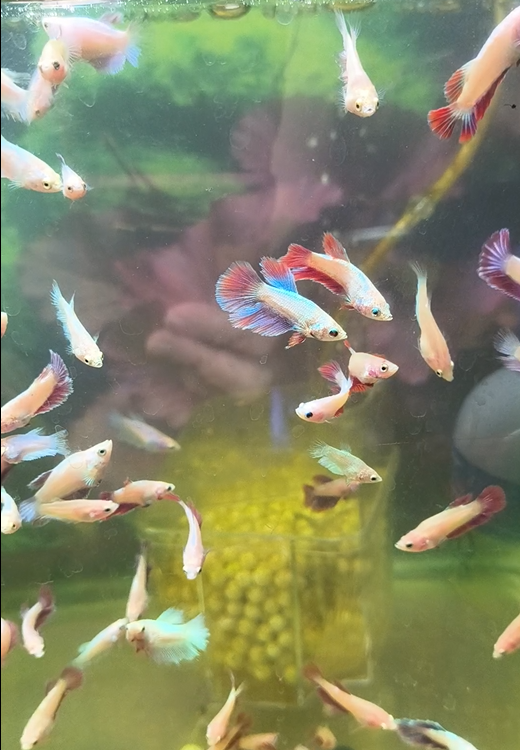 Image 3 of 3
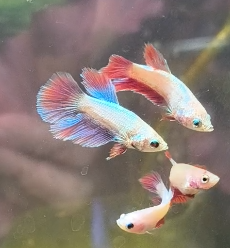
Our Betta females are bred at Purple Aquatics in the USA from original high quality Thailand stock. These are from our first pairing of a Pink Male and Pink Red Female. These girls have beautiful iridescent highlight of pink, lavender, green, blue, and red colors. You will be shipped a random color or different colors for multi Betta packs. Contact us with questions or preferences. You will also receive a free Catalpa Leaf with your order. This is very important to use to maintain the long-term health of your new Betta. There will also be information included on how to keep your new Betta healthy and happy.
BEHAVIOR & PERSONALITY
Bettas Are territorial Male bettas will flare and fight if housed with other males, or sometimes even their reflection. They recognize their owners. Bettas can learn to associate your presence with feeding and may even follow your finger. With patience, bettas can learn to swim through hoops, follow a finger, or flare on command. Bubble Nests equal Happy Male Bettas. Males blow bubble nests when they’re healthy and ready to breed. They flare to show off or warn. Flaring gills and fins is both a defense mechanism and a display of dominance. They get bored without enrichment. Bettas benefit from plants, caves, and changes in scenery to stay mentally stimulated.
CARE
They Do NOT Thrive in Tiny Bowls. Bettas need heated, filtered tanks—ideally 2.5 to 5+ gallons minimum. Larger is better, 10 to 20 Gallons. They Prefer Warm Water 76–82°F is the ideal temperature range for a healthy betta. Catalpa leaves are vital to the health of a Betta Fish. We boil Catalpa leaves and add the Catalpa Tea Water into their tanks. Keep this tonic in your Betta tanks for optimum health. Bettas enjoy plants, caves, and decorations where they can rest and feel secure. They’re Carnivores and Betta fish need a high-protein diet—not just flakes. Frozen bloodworms and pellets are ideal. Female Bettas can live together in sororities of 4–6+ females with the right setup, aggression may be reduced. Males Must Be Kept Alone. Male bettas should never be housed together—unless you’re an expert breeder with dividers.
DOA Policy: I guarantee live arrival. Pictures of the DOA fish still in the bag WITHIN 2 hours of the delivery time noted in your tracking number. Make sure you are home or someone is to take them inside ASAP and begin acclimating them to their new home. The largest risk in shipment is the fish being left in a mailbox upon delivery. You can sign up for notifications about your delivery via USPS.com or for FedEx at https://www.fedex.com/en-us/delivery-manager.html
Shipping: We do not ship these fish cheaply. The Box will be well insulated and if needed hot or cold packs will be added. We ship on Saturday, Monday, Tuesday, and occasionally on Wednesday to avoid weekend delivery delays. We do not label the boxes with "Live Fish" as this causes delays and DOAs.
Acclimating your new fish: I do not recommend drip acclimation for these fish. Its best to float the bag 20-30 minutes to adjust them to the temperature of their new home and then remove them from the bag and release them into the tank with plenty of aeration.
Our Betta females are bred at Purple Aquatics in the USA from original high quality Thailand stock. These are from our first pairing of a Pink Male and Pink Red Female. These girls have beautiful iridescent highlight of pink, lavender, green, blue, and red colors. You will be shipped a random color or different colors for multi Betta packs. Contact us with questions or preferences. You will also receive a free Catalpa Leaf with your order. This is very important to use to maintain the long-term health of your new Betta. There will also be information included on how to keep your new Betta healthy and happy.
BEHAVIOR & PERSONALITY
Bettas Are territorial Male bettas will flare and fight if housed with other males, or sometimes even their reflection. They recognize their owners. Bettas can learn to associate your presence with feeding and may even follow your finger. With patience, bettas can learn to swim through hoops, follow a finger, or flare on command. Bubble Nests equal Happy Male Bettas. Males blow bubble nests when they’re healthy and ready to breed. They flare to show off or warn. Flaring gills and fins is both a defense mechanism and a display of dominance. They get bored without enrichment. Bettas benefit from plants, caves, and changes in scenery to stay mentally stimulated.
CARE
They Do NOT Thrive in Tiny Bowls. Bettas need heated, filtered tanks—ideally 2.5 to 5+ gallons minimum. Larger is better, 10 to 20 Gallons. They Prefer Warm Water 76–82°F is the ideal temperature range for a healthy betta. Catalpa leaves are vital to the health of a Betta Fish. We boil Catalpa leaves and add the Catalpa Tea Water into their tanks. Keep this tonic in your Betta tanks for optimum health. Bettas enjoy plants, caves, and decorations where they can rest and feel secure. They’re Carnivores and Betta fish need a high-protein diet—not just flakes. Frozen bloodworms and pellets are ideal. Female Bettas can live together in sororities of 4–6+ females with the right setup, aggression may be reduced. Males Must Be Kept Alone. Male bettas should never be housed together—unless you’re an expert breeder with dividers.
DOA Policy: I guarantee live arrival. Pictures of the DOA fish still in the bag WITHIN 2 hours of the delivery time noted in your tracking number. Make sure you are home or someone is to take them inside ASAP and begin acclimating them to their new home. The largest risk in shipment is the fish being left in a mailbox upon delivery. You can sign up for notifications about your delivery via USPS.com or for FedEx at https://www.fedex.com/en-us/delivery-manager.html
Shipping: We do not ship these fish cheaply. The Box will be well insulated and if needed hot or cold packs will be added. We ship on Saturday, Monday, Tuesday, and occasionally on Wednesday to avoid weekend delivery delays. We do not label the boxes with "Live Fish" as this causes delays and DOAs.
Acclimating your new fish: I do not recommend drip acclimation for these fish. Its best to float the bag 20-30 minutes to adjust them to the temperature of their new home and then remove them from the bag and release them into the tank with plenty of aeration.